Universal Waterborne Epoxy Matrix
(Vapor-Permeable & High-Penetration Substrate Specification)
Product Overview
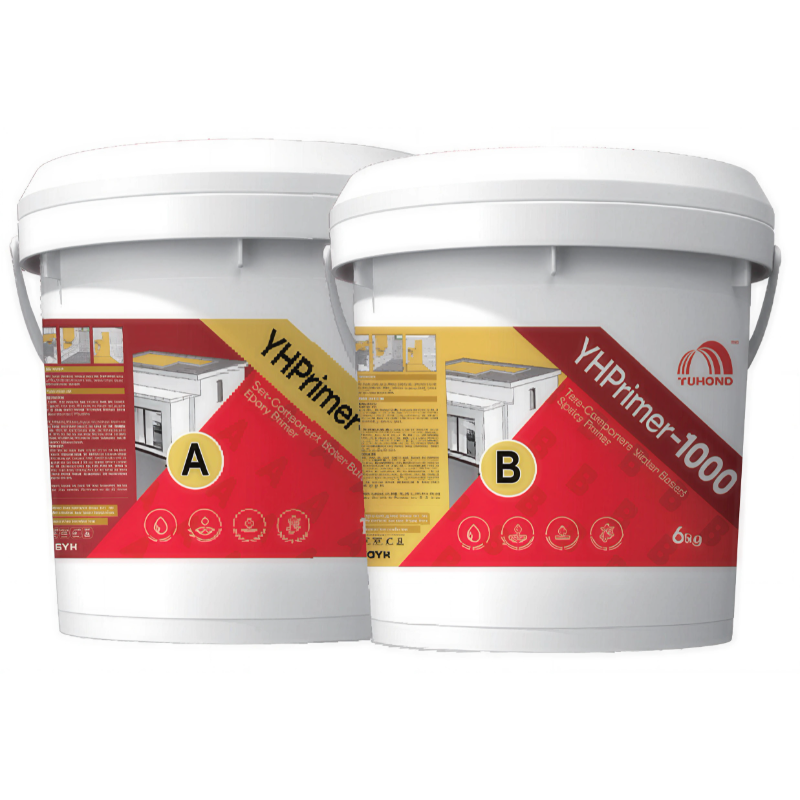
The definitive eco-compliant foundational barrier for high-performance building envelopes. This two-component (2K), water-based epoxy primer is engineered with advanced emulsification technology to deliver superior capillary penetration across diverse mineral substrates. Formulated for maximum substrate affinity, it functions as a breathable yet impenetrable “bonding bridge,” neutralizing micro-void out-gassing and ensuring a resilient, monolithic bond for subsequent polyurethane and acrylic assemblies.
Core Advantages
▪ Vapor-Permeable “Breathable” Shield: Specifically engineered to manage substrate vapor dynamics. Its optimized molecular lattice blocks liquid water ingress while allowing internal moisture vapor to escape. This “Breathability” prevents the build-up of osmotic pressure, ensuring the long-term integrity of top-layer systems on damp or green concrete.
▪ Adjustable Penetration Rheology: Features a versatile, water-reducible chemistry. It can be precision-diluted to achieve ultra-low viscosity, allowing the epoxy resins to “deep-dive” into high-porosity or degraded concrete matrices, consolidating the substrate from within and creating a high-tenacity mechanical interlock.
▪ Zero-VOC “Green Building” Compliance: A 100% water-based, ultra-low odor formulation designed to meet the most stringent global environmental standards (LEED/BREEAM). It is the mandated choice for “Occupied Space” refurbishment projects where indoor air quality (IAQ) and installer safety are non-negotiable.
▪ Universal System Compatibility: Engineered as a high-affinity interface for a wide range of topcoats, including moisture-cured polyurethanes, high-build acrylics, and cementitious screeds. It effectively seals micro-voids to mitigate out-gassing, providing a smooth, pinhole-free foundation for professional architectural finishes.
Engineered Applications
▪ Universal primer for interior wet-rooms, commercial kitchens, and medical facilities.
▪ High-penetration sealer for porous or aged concrete, mortar, and ceramic substrates.
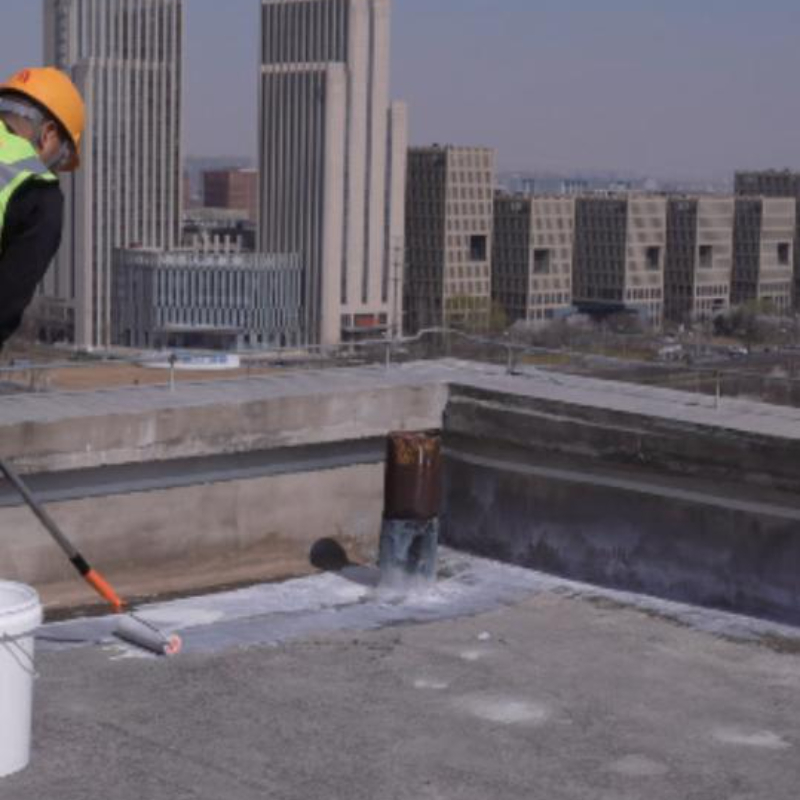
▪ Moisture vapor management for exterior structural slabs prior to polyurethane waterproofing.
▪ Eco-compliant interface for projects with strict VOC and odor emission constraints.


System Integration: The Eco-Compliant Breathable Foundation Matrix
To successfully deploy a Waterborne Epoxy Matrix in strict “Occupied Space” or LEED-certified environments, you must respect the physics of water evaporation. While this eco-compliant primer effortlessly penetrates porous substrates and prevents osmotic blistering, its cross-linking process requires the carrier water to fully evaporate. Pooling this waterborne primer into deep structural voids prevents curing, resulting in a soft, compromised foundation. Eliminate curing failures, seal critical transitions, and guarantee your zero-VOC assembly by integrating these mandatory components:
Substrate Profiling & Deep Void Elimination:
Must pair with: Industrial Ultra-Rapid Setting Hydraulic Cement
Why it’s critical: Waterborne epoxies are formulated for thin-film capillary penetration, not bulk filling. If poured into structural spalls, uneven craters, or exposed rebar cavities, the trapped water cannot escape, preventing the epoxy from cross-linking and achieving structural hardness. This ultra-rapid hydraulic matrix must be deployed first to flush out all deep divots and reconstruct a perfectly flat substrate. This ensures the waterborne epoxy is applied at a uniform film thickness for rapid, predictable curing.
Dissimilar Material & Indoor PVC Penetration Gas-Lock:
Must pair with: Architectural High-Performance PU Sealant
Why it’s critical: In commercial kitchens and interior wet-rooms, floor drains and plumbing are exclusively PVC. Waterborne epoxy is entirely incompatible with smooth, organic plastics; it will simply dry into a non-adherent film that peels away under thermal stress. This dynamic polyurethane sealant must be heavily extruded around all drain flanges and pipe boots to create an elastomeric, watertight gasket that isolates the dissimilar materials from the epoxy-treated concrete.
Kinetic Cold-Joint & Perimeter Isolation:
Must pair with: High-Tenacity Elastomeric Flash-Bond Matrix
Why it’s critical: Even highly penetrated concrete will crack at the 90-degree wall-to-floor perimeters when the building shifts. A rigid epoxy primer cannot bridge kinetic movement. This cold-applied, zero-VOC non-woven butyl tape must be centered over all angular transitions and cold joints. It acts as a high-tensile structural “skeleton,” completely isolating substrate movement while preserving the stringent indoor air quality (IAQ) requirements of the project.